Money
Currency exchange
Record a real currency conversion so exchange gain or loss stays separate.
Current screens
These images use the current English interface. Student and trial-customer details are replaced with demo labels.
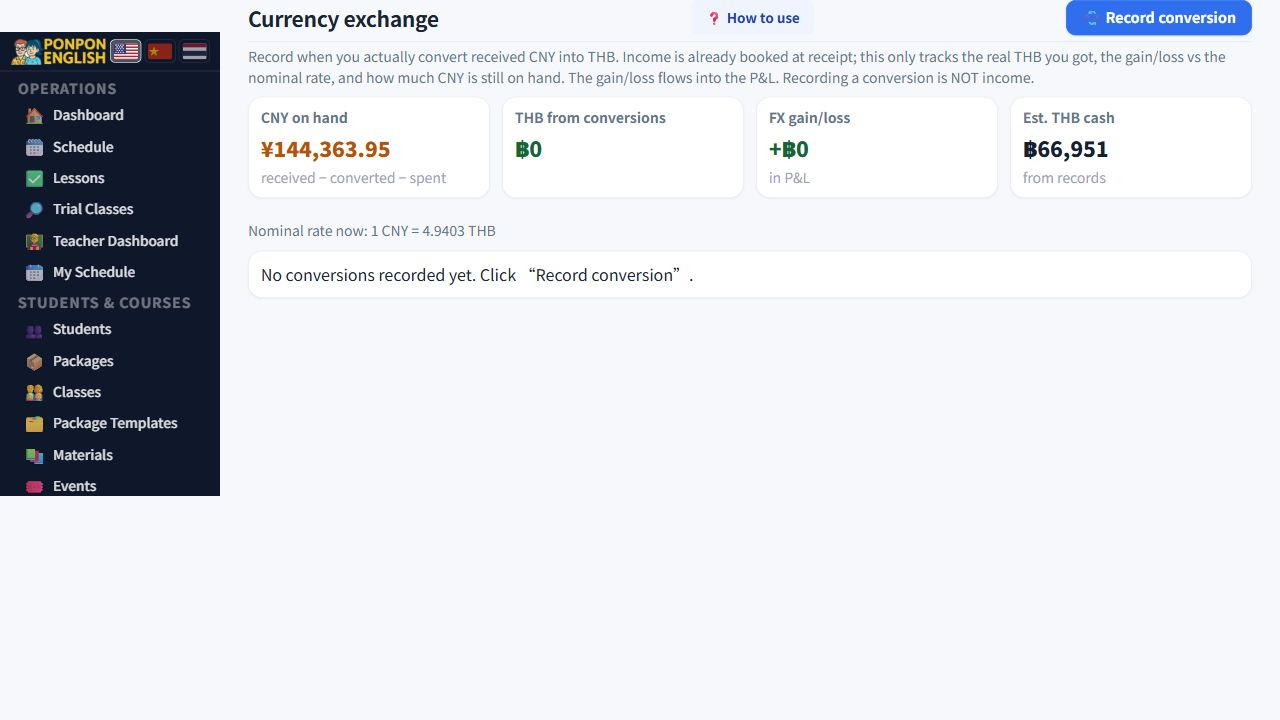
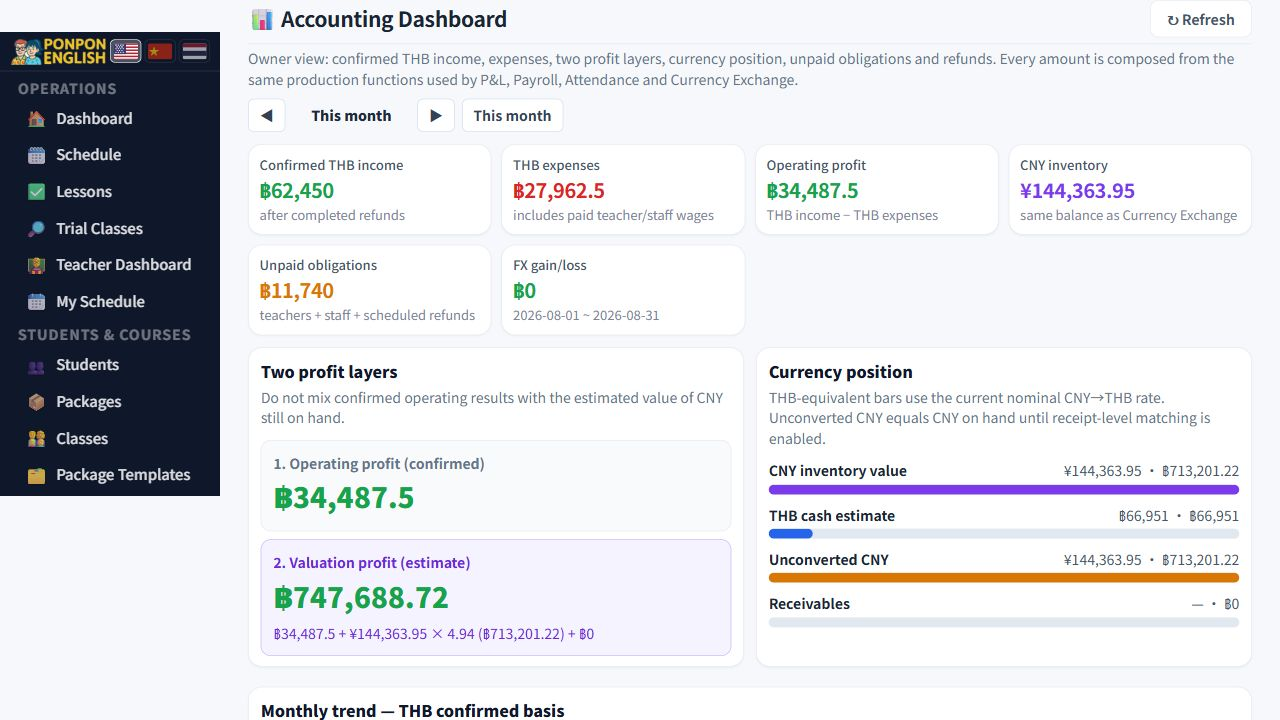
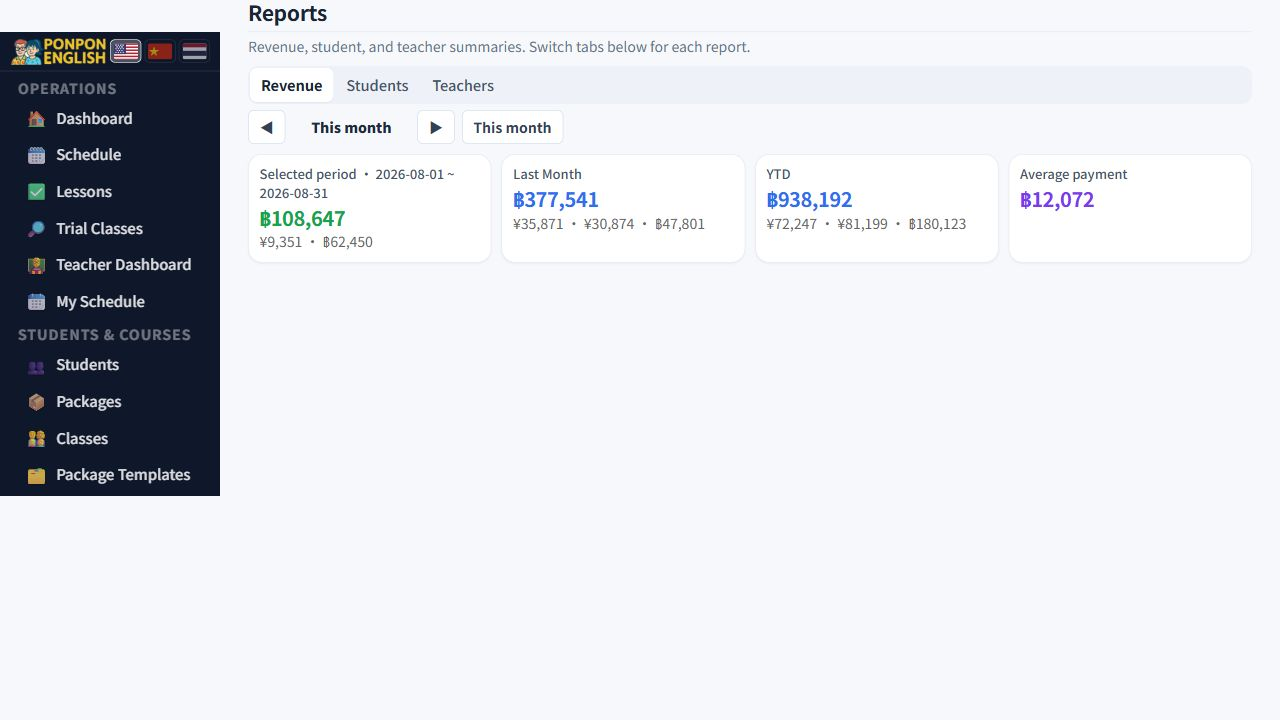
Currency exchange
Record a real conversion of foreign currency into local currency.
Open 财务→人民币换汇: the finance group, then currency exchange. Use this page only when the school has actually changed money, at a bank, at an exchange counter, or through a transfer. It is a record of something that happened, not a calculator.
Converting money the school already received does not create new revenue. The school is not richer because the notes changed. The system never counts a conversion as revenue, and you must never record one as a payment on 收款 (payments).
Record a conversion
- Do the exchange in the real world and keep the slip.
- Open the currency exchange page and start a new record.
- Enter how much foreign currency you handed over.
- Enter how much local currency you actually received back.
- Enter the date the exchange happened.
- Save.
Effective rate, gain and loss
From those two amounts the system works out the effective rate, which is the rate you truly got after every fee and every spread. It compares that with the nominal rate the school uses in its books. The difference is stored as an exchange gain or an exchange loss.
That difference then appears in the profit and loss on its own separate line. This matters more than it sounds. Teaching income and teaching costs stay clean, so operating profit can be compared month against month, while money won or lost on exchange rates stays visible on its own line instead of hiding inside the school's results.
When the rate you got was poor, it is tempting to go back and edit the payment record until the numbers match. Do not. The payment shows what the family paid. The exchange record shows what happened to that money afterwards. Two facts, two records.
Habits that keep this honest
- Record the exchange on the day it happens, while the slip is still in your hand.
- Enter the amount you truly received, not the rate advertised on the board outside.
- Make one record for one real exchange. Do not add up a month of trips into a single line.
- Keep the paper slip. The record and the slip should always agree.
If the exchange loss is large every month, the school is losing money at the counter, not in the classroom. That is a business decision worth reviewing: where you change money, and how often.
Owners, managers and senior staff. Teachers and junior staff cannot see it.